

Matt Blatt Tire and Auto - Steering Geometry After a Lift — What Pitman, NJ Drivers Should Plan For
Lift your truck or Jeep and you will feel it in the steering wheel. That is not a bad thing—if your geometry and alignment are dialed in, the wheel feels centered, the truck tracks straight down Delsea Drive, and mid-corner bumps near Alcyon Lake do not push you across the lane. But if angles go unchecked, a great-looking build can wander, shimmy, or chew through fresh all-terrains in a few thousand miles. This guide walks through what changes when you lift, what to adjust, and how to verify your truck is road ready after the install.
What changes when you add height
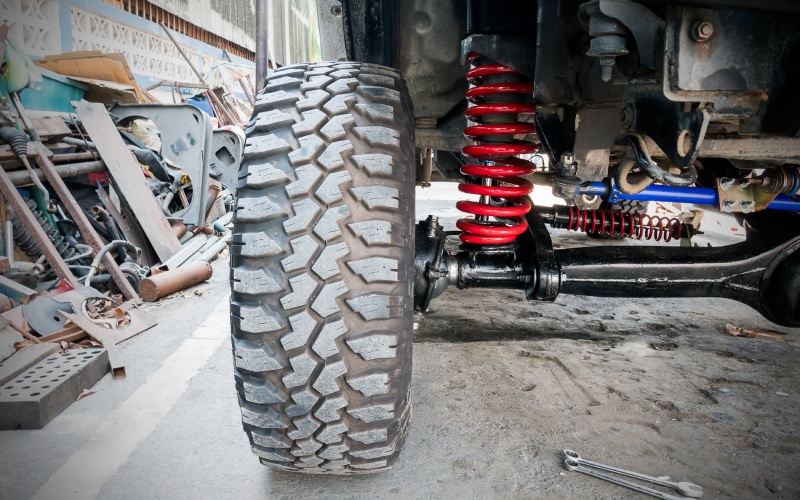
Any change to ride height alters the relationship between suspension pivot points and the road. Caster can decrease as the front lifts, softening steering return to center. Camber can tip in or out, moving the tire’s contact patch and inviting wear. Toe can drift, forcing the front tires to scrub. On independent front suspensions, control arm angles grow steeper, which can stress ball joints and CV axles under full droop. Solid axle setups shift track bar and drag link relationships, sometimes creating bump steer if the arcs are misaligned. The short version: height touches everything—so measure, correct, and confirm.
The alignment essentials
A post-lift alignment is not optional; it is where handling and tire life are won or lost. Caster targets vary by platform, but adding positive caster within spec typically improves straight-line stability. Camber should live inside the green zone to keep the tread flat on the pavement. Toe belongs near factory spec to cut scrub and heat. If the factory adjusters run out of range, consider cam bolts, adjustable control arms, or offset ball joints. On solid axle rigs, adjustable track bars recenter the axle under the frame and reduce bump steer by keeping track bar and drag link angles complementary.
Do not forget steering angle sensor resets and ADAS checks on newer vehicles. Cameras, radar, and lane-keeping assistance expect known ride height and geometry; post-lift verification helps those systems behave predictably on your Pitman commutes and Philly runs.
Beyond alignment: driveline, brakes, and electronics
Lifts also affect driveline angles. If you feel vibration under acceleration, inspect U-joint phasing, pinion angle, and carrier bearing alignment. A small shim or adjustable control arms may solve it. Check brake line slack at full droop and full lock; longer lines or relocation brackets prevent strain. Verify ABS and wheel speed sensor wiring has enough play. When stepping up tire size, recalibrate the speedometer to keep driver assistance features and shift points happy—and to avoid unintentionally speeding down West Holly Avenue.
Road test checklist after a lift
- Straight-line tracking: On a flat road, the wheel should sit centered with no drift or constant correction.
- Braking stability: Panic stops should be drama-free—no darting, no dive beyond what your springs and shocks predict.
- Cornering composure: Mid-corner bumps should not kick the truck off line or trigger bump steer sensations.
- Noise and vibration: Listen for tire hum, but hunt down new vibes—they often point to driveline angle or balance issues.
Complete your test loop on familiar Pitman streets and then repeat with a highway run. If anything feels off, get the truck on an alignment rack and recheck fasteners at torque. New suspension components can settle slightly as bushings bed in.
Choosing components that make geometry easier
A well-engineered kit anticipates alignment needs. Look for corrected knuckles on IFS platforms, track bar brackets or adjustable bars on solid axles, and dampers valved for your vehicle’s weight with accessories. If you tow, choose progressive or higher-rate rear springs and confirm headlight aim after you add the trailer. For wheels and tires, offset matters as much as diameter—too little backspacing can push the scrub radius outboard and add kickback in the steering over potholes. A modest offset paired with an appropriate tire width keeps steering effort and feedback predictable.
Maintenance rhythm for lifted rigs
Schedule torque checks at 500 to 1,000 miles after installation, then at regular service intervals. Keep tires rotated and balanced, and set pressures for real load, not just the sidewall max. Revisit alignment when you change tire size, add armor or a winch, or feel new steering behavior. Small, steady touches keep your build feeling tight long after the Instagram post fades.
Frequently Asked Questions:
Do I need to re-gear after larger tires?
If acceleration and shift points feel lazy after a big tire jump, new axle ratios restore pep, towing confidence, and correct operating ranges.
Why does my steering wheel sit off-center post-lift?
Track bar or tie-rod length needs correction. Recentering the axle and adjusting the drag link returns the wheel to center, then finalize on an alignment rack.
Can I daily a lifted truck comfortably?
Yes—with tuned shocks, sensible tire choice, and a geometry-first alignment. Many drivers report improved control over rough pavement once dialed in.
Should I upgrade brakes with bigger tires?
Larger, heavier tires increase rotational mass. If stops feel longer, investigate pad compounds, rotor size upgrades where available, and ensure ABS operates correctly.
How soon after the lift should I schedule alignment?
Align immediately after installation, then recheck after 500 to 1,000 miles once components settle. Realign any time parts change or new symptoms appear.
When you are ready to lift and align with confidence, our team brings the tools, the ADAS awareness, and the road-test discipline to make it right the first time—serving Berlin, Glassboro, and Pitman. You will work with one point of contact who listens, plans, and follows through. From driveline angles to sensor resets, nothing is left to chance. That is how we deliver builds that look sharp, drive straight, and hold alignment over South Jersey miles. The journey should feel as good as it looks, and with Matt Blatt Tire and Auto behind your project, it does.
