

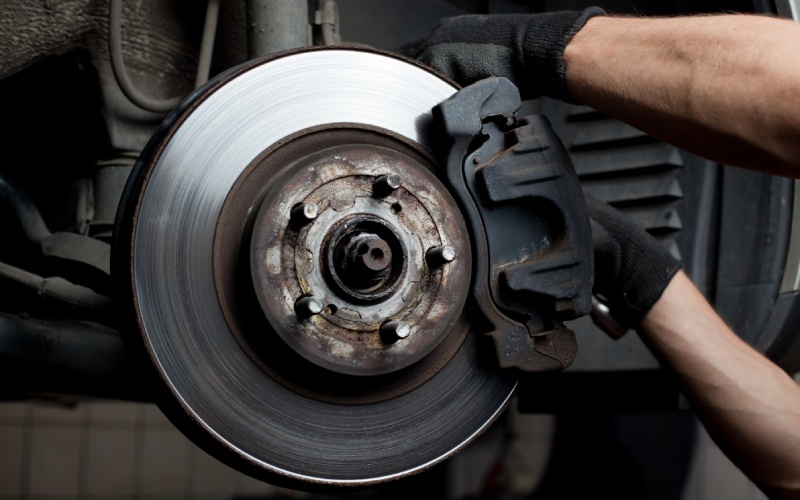
Matt Blatt Tire and Auto - Drum-to-Disc Brake Conversions — A Practical Guide for Sewell, NJ Drivers
Thinking about a rear drum-to-disc brake conversion? For many vehicles, the upgrade can sharpen pedal response, reduce fade on repeated stops, and simplify long-term service. In and around Sewell, NJ—where daily driving can swing from suburban stoplights to faster stints on Route 55—those benefits show up as a more stable pedal under heat and quicker recovery after rain. A successful conversion, however, is more than swapping shoes for pads. It means matching hydraulics, hardware, and parking-brake function so the system stays balanced and trustworthy in every situation.
What changes when you move from drums to discs
Rear drums multiply force through self-energizing shoe geometry, which is why they feel strong once engaged. Discs, by contrast, are wonderfully linear and shed heat quickly, but they do not self-energize in the same way. That difference impacts hydraulic ratio and bias. A proper conversion maintains front-to-rear distribution so the rear axle contributes without locking early. It also preserves a reliable mechanical parking brake—often via drum-in-hat rotors or calipers with integrated parking-brake mechanisms.
On many platforms, factory front discs pair with rear drums for cost and packaging reasons, not because discs lack merit in back. A thoughtful rear conversion brings the car’s braking character into one consistent feel: short dead travel, progressive bite, and predictable modulation. You will notice this descending long grades, backing a trailer down a ramp, or braking hard to make a left at a short green.
Core components and fitment details
A parts list usually includes calipers (or caliper brackets), rotors, pads, hoses, new parking-brake cables or adapters, dust shields, and hardware. Some applications benefit from a master cylinder with a slightly different bore, updated proportioning strategy, or rear ABS tone rings. Wheel fitment matters: rotor diameter and caliper envelope can conflict with smaller wheels, so confirm clearance with your wheel’s offset and spoke design. Finally, routing and securing flexible hoses, then torqueing fasteners and bleeding properly, are what turn a parts pile into confident stops.
- Hydraulic balance: Verify master cylinder bore, pedal ratio, and any proportioning valves support disc rear pressure without premature lockup.
- Parking brake: Choose calipers with mechanical levers or drum-in-hat rotors that preserve easy, reliable parking-brake operation.
- Wheel clearance: Measure rotor and caliper package height against wheel diameter, spoke shape, and offset to ensure safe clearance.
- ABS compatibility: Retain or replicate tone rings and sensor spacing so wheel-speed signals remain accurate after the swap.
- Brake lines and hoses: Use correct-thread fittings and hose lengths; secure routing to avoid chafe, kinks, and heat exposure.
Done right, you will get straighter, quieter stops with less pedal variation as parts heat and cool. Done hastily, the system can feel wooden at low speed, lock a rear wheel early on gravel, or set ABS errors. The difference lives in measurements, torque specs, and a thorough road test.
Pedal feel, bedding, and noise control
Once the hardware is in, fluid quality and pad bedding decide the first 1,000 miles. Bleed until the pedal is firm and repeatable, then bed pads following the pad maker’s steps—typically a series of moderate decelerations to transfer an even friction layer. That process prevents judder from uneven deposits and keeps brake torque smooth. Choose rear pad compounds that complement your front friction: softer rears can tame squeal and help rear torque ramp in progressively, while higher-friction rears suit heavier vehicles or towing. Hardware lubrication—caliper slide pins and pad abutments—reduces low-speed chatter and keeps wear patterns even.
Noise and vibration usually trace back to details: a rusty hub face that tilts the rotor, dry slide pins that skew pad contact, or missing shims. Addressing those issues during installation is easier than chasing them later. A baseline runout check with a dial indicator and a hub cleanup with a non-woven disc can spare you a future pulsation.
Is a conversion right for your vehicle and use?
Rear discs make the most sense if you tow, tackle hills routinely, or want a firmer, more modern pedal feel to match upgraded fronts. Commuters who prioritize low maintenance may still prefer well-serviced drums that integrate the parking brake simply and last a long time. Budget for related work—fresh brake fluid, new rear wheel bearings if they press into the hub, and a four-wheel inspection to verify the front axle is healthy. Brake systems perform as a team; the upgrade should make the whole team better, not just the rear players.
As a shop that services all makes and models and understands the subtleties of brake bias, ABS logic, and hardware fitment, Matt Blatt Tire and Auto approaches conversions with a full-system mindset. That means confirming parts compatibility before wrenching, documenting rotor thickness and runout, and validating results during a controlled road test that includes light, moderate, and hard stops plus wet-road checks.
If you drive through Sewell’s neighborhoods, navigate busy lots, and merge onto faster county roads, you will appreciate a rear setup that stays quiet in traffic but keeps its composure when you need firm deceleration. The payoff is a pedal that feels the same on a cool morning as it does after a few spirited stops—consistent, confident, and easy to modulate.
When you are ready to explore options, look for vehicle-specific kits that preserve the parking brake and maintain factory wheel-speed sensing. Ask how the installer will measure and control runout, set torque values, and bed the pads. Clear answers on those points are great predictors of how the brakes will feel at the first stop sign and thousands of miles later.
Our team is serving Monroe, Williamstown, and Sewell with brake inspections, maintenance, and professional guidance so you can decide whether a conversion aligns with your vehicle and driving. Bringing the rear axle up to disc performance can be a smart, durable upgrade—provided the details receive the attention they deserve.
Frequently Asked Questions:
Will a rear disc conversion shorten my stopping distance?
It can improve consistency and heat management, which helps preserve short stopping distances in repeated or high-load scenarios. Absolute distance still depends on tires, weight transfer, and road surface.
Do I need a new master cylinder?
Not always. Some vehicles retain excellent feel with the stock unit. Others benefit from a different bore size to optimize pedal travel and pressure. Proper diagnosis determines the best path.
What about my parking brake?
Choose a solution that retains a mechanical parking brake—either drum-in-hat rotors or calipers with integrated levers—so hill holding and inspections remain straightforward.
How long does a well-executed conversion last?
With quality parts, correct lubrication, and periodic fluid service, pads and rotors can follow normal wear intervals. Driving style, vehicle weight, and towing use ultimately set the cadence.
