

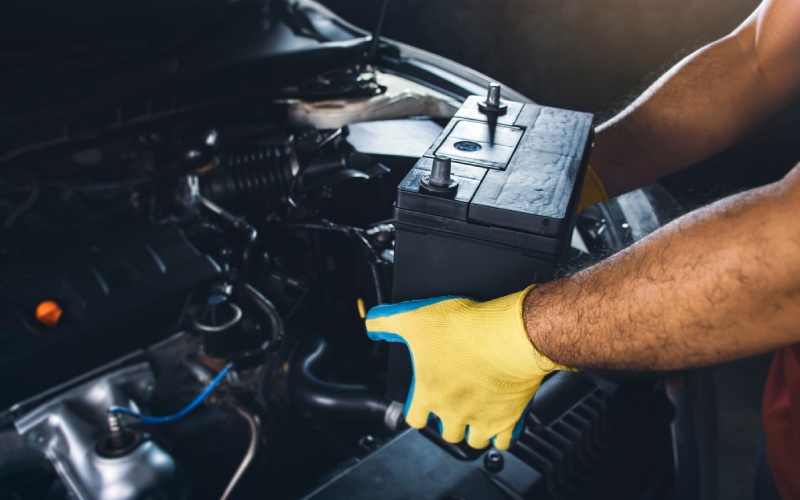
Matt Blatt Tire and Auto - Why Does My Car Battery Keep Dying Overnight near Clayton, NJ?
If you roll out in the morning and hear a faint click instead of a confident start, the cause is often more than a tired battery. For drivers in Clayton, NJ who rely on quick commutes up Delsea Drive to Glassboro, school drop-offs, or weekend trips to Scotland Run Park, an overnight battery drain can derail the entire day. At Matt Blatt Tire and Auto in nearby Glassboro, our AAA-Approved Auto Repair Facility has been diagnosing and repairing electrical and electronic system issues for over 30 years, helping local drivers get back on the road with confidence.
Modern vehicles have dozens of modules that “go to sleep” after shutdown while still drawing a small amount of power. That quiescent draw is normal—until something stays awake when it should not. Add in Gloucester County’s temperature swings, humidity, and frequent short trips that never fully recharge the battery, and a healthy electrical system can begin to struggle. Below, we explain the most common reasons a battery dies overnight, how our team pinpoints the cause, and what you can do to prevent repeat no-starts.
Before diving into the details, it helps to understand the difference between a weak battery and a parasitic draw. A weak battery cannot hold energy well, even if nothing is draining it; a parasitic draw is an unwanted electrical load that continues to consume power while the vehicle is parked. Both can leave you stranded—our job is to identify which is at play and correct it the right way.
Here are the usual suspects we see in vehicles that arrive from Clayton and the surrounding roads off Route 55 for an electrical check.
- Parasitic draw from a module or switch: A door-ajar switch, glove box light, trunk light, or a control module that will not “sleep” can keep drawing power for hours.
- Alternator diode leakage: A failing diode inside the alternator can allow current to flow backward overnight, silently draining an otherwise good battery.
- Aftermarket add-ons: Hardwired dash cams, remote starts, auxiliary lighting, and audio amplifiers can be installed on constant-power circuits and never switch off.
- Battery at end of life: Sulfation and age reduce capacity—cold snaps common in South Jersey winters can expose a borderline battery overnight.
- Loose or corroded connections: Poor grounds or terminal corrosion increase resistance, weaken charging, and invite intermittent no-starts.
- Moisture intrusion or corrosion: Water leaks or road salt can affect connectors and Body Control Modules, causing erratic awake cycles.
- Keyless proximity issues: If a key fob sits close to the car in a garage or driveway, some systems periodically “wake” as if someone approached the vehicle.
- Software anomalies: Some vehicles need module updates—without them, control units may cycle longer than designed after shutdown.
Because the causes span simple to complex, proper testing matters. Swapping parts without a plan can waste time and keep the root issue lurking. Our approach is structured, data-driven, and designed to protect the vehicle’s electronics from the moment it arrives.
Here is how we diagnose an overnight drain at Matt Blatt Tire and Auto, step by step.
- Battery health verification: We start with a conductance test and load assessment to measure state of health, state of charge, and reserve capacity.
- Visual and basic checks: We confirm lights and accessories are off, inspect terminals and grounds, and look for aftermarket wiring or splices.
- Parasitic draw measurement: Using an in-line ammeter or clamp meter on the battery cable, we monitor current after shutdown and allow modules to time out—often 30 to 60 minutes.
- Circuit isolation: If draw exceeds spec, we pull fuses one at a time or use a current probe on individual circuits to identify the exact branch responsible.
- Charging system evaluation: We test alternator output and diode integrity because a single leaky diode can mimic a constant accessory drain.
- Scan tool assessment: We check for Diagnostic Trouble Codes, monitor network activity, and verify that modules reach sleep mode as intended.
- Targeted repair: Depending on findings, we repair wiring, replace faulty switches or modules, correct ground paths, or refit accessories to switched-power circuits.
- Retest and verification: We confirm key-off draw now falls within factory specifications and that the vehicle restarts reliably after sitting.
- Driver profile and prevention: We discuss recent driving patterns—short trips on Delsea Drive, extended storage, or new accessories—to tailor preventive tips.
Knowing when to schedule service is just as important. If your vehicle cranks slowly after an overnight park, if the lights dim at idle, or if the Battery/Charging light flickers on your dash, the electrical system deserves immediate attention. These symptoms often worsen with colder weather and extended accessory use—think heated seats, rear defrosters, and headlights during early winter evenings in Clayton.
Below are signs that your vehicle may benefit from an electrical and electronic systems evaluation at our Glassboro facility.
- Repeated morning no-starts: The battery reads low after sitting but recovers after a jump or a long drive.
- Intermittent interior or exterior lighting: Dome or cargo lights remain faintly on, or headlights subtly flicker during idle.
- Accessory glitches: Power windows, locks, or infotainment resets occur after the car has been parked.
- Hot alternator smells or whining: Charging components may be working too hard to mask a hidden draw.
Local conditions matter. Short, stop-and-go hops between Clayton neighborhoods and Glassboro shopping plazas can leave even a healthy battery undercharged. Summer heat near pavement along Delsea Drive accelerates battery aging, while winter cold pulls down available cranking amps overnight. If you park for days at a time—say, during a long weekend at Scotland Run Lake—an intelligent battery maintainer can preserve charge and extend battery life.
As part of the Goodyear Tire & Service Network, our family-owned shop pairs modern diagnostics with transparent communication. We honor and accept extended warranties, service all makes and models—from compact hybrids to lifted trucks and Jeep® SUVs—and stand by our work. You will receive clear test results and practical recommendations, never guesswork.
If you are experiencing overnight drains near Clayton, we are minutes away at 1210 Delsea Drive N, Glassboro, NJ 08028. Our hours are Monday through Friday 8am to 5pm and Saturday 8am to 4pm. Call us at (856) 218-7930 or schedule service online at your convenience—we will pinpoint the issue and get your vehicle starting strong again.
Frequently Asked Questions:
How much key-off current draw is normal?
Most vehicles stabilize between 20 and 50 milliamps after all modules sleep, with some late-model or luxury systems landing around 60 to 85 milliamps. It can take 30 to 60 minutes for networks to time out. Anything meaningfully above spec that persists is a candidate for parasitic draw testing.
Is a parasitic draw test safe for my vehicle’s electronics?
Yes—when performed correctly. We use an in-line fused ammeter or high-resolution clamp meter and follow OEM procedures so modules can enter sleep mode naturally. We protect memory settings when needed and never create voltage spikes that could harm control units.
Can a new battery still die overnight?
Absolutely. A new battery will not overcome a persistent electrical load or a leaky alternator diode. If an accessory or module remains active, it will pull a fresh battery down just as surely as an old one. Testing the system prevents repeat failures.
Will replacing the alternator fix an overnight drain?
Sometimes. If the root cause is a failed diode, a properly tested alternator replacement can resolve the issue. However, if the draw originates from a switch, light, module, or aftermarket device, an alternator swap will not help. We verify the source before recommending any component replacement.
Do short trips around Clayton contribute to dead batteries?
Yes. Repeated 5 to 10 minute drives between home, school, and shops along Delsea Drive may not replenish the energy used during each start—especially with lights, HVAC blowers, and heated accessories running. Occasional longer drives or an intelligent maintainer can offset these patterns.
My dash cam or remote start is hardwired—could that be the problem?
It can be if installed on a constant-power circuit without proper low-voltage cutoff or switched-power integration. We inspect accessory wiring, re-route feeds to appropriate circuits, add relays as needed, and confirm the device shuts down when the vehicle does.
What preventive steps help avoid future overnight drains?
Keep terminals clean and tight, park away from constant key fob proximity when possible, ask us to check for relevant software updates, and consider a maintainer if the car sits several days at a time. If new electronics are added, have our technicians integrate them with switched power and proper fusing.
Will you honor my extended warranty for electrical diagnostics and repairs?
Yes. We honor and accept extended warranties and will coordinate coverage details on your behalf. Our team documents findings clearly, provides the testing results your provider expects, and keeps you informed throughout the process.
When you need reliable electrical and electronic systems service near Clayton, NJ, turn to the local team that treats your vehicle like our own. Schedule your visit with Matt Blatt Tire and Auto today and start every morning with confidence.
