

Matt Blatt Tire and Auto - Signs Your Car Needs a Wheel Alignment — Mullica Hill, NJ
Wheel alignment gradually drifts as bushings age, shocks and struts lose damping, and small impacts nudge angles off-center. Because this change is subtle, many drivers do not notice the symptoms until tires are already wearing unevenly. If your car drifts on a straight road with a level crown, the steering wheel sits off-center, or you notice squeal when turning into a parking spot, your alignment angles may be outside spec. Irregular wear patterns offer more clues: feathering feels like saw teeth when you run your palm across the tread; cupping shows as scalloped dips around the tread blocks; inside or outside shoulder wear points to camber or toe errors. The earlier you address these patterns, the more remaining tread you can save.
Another underrated sign is driver fatigue. When toe is off, you unconsciously make constant micro-corrections. That effort adds up on longer drives and can make highway commutes feel more tiring than they should. You might also see fuel economy slip a bit, because misaligned tires scrub and generate heat. After any suspension or steering repair, new tires, or a hard curb or pothole contact, schedule an alignment check. A four-wheel alignment measures rear geometry and sets the thrust line first so the front can be centered to that reference. This step is essential for straight tracking and a level steering wheel.
- Pulled one way after a bump: Likely toe or camber shift from impact.
- Vibration at certain speeds: Often wheel balance or bent rim, but alignment should be verified as part of diagnosis.
- Rapid inside wear: Excess negative camber or toe-out; inspect for worn bushings or sagging springs.
- New tires, old pull: Alignment, not tires, is usually the cause if brand-new tires still drift.
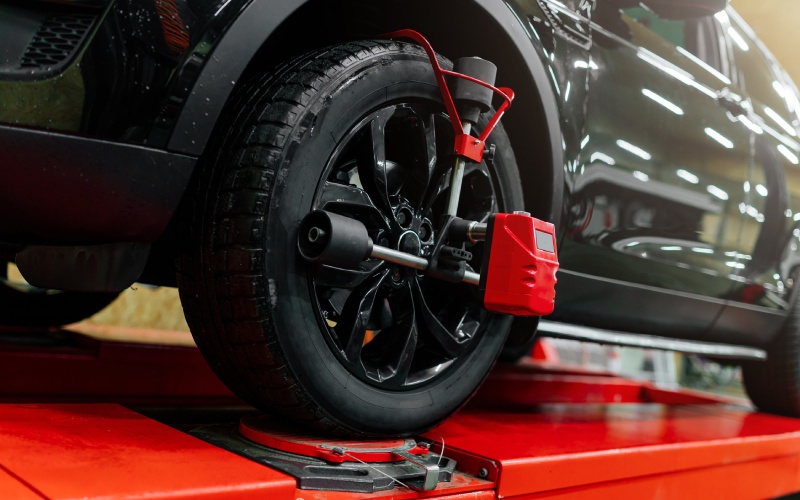
When you book service, expect a steering and suspension inspection first, because worn tie rods, ball joints, and control arm bushings allow angles to move under load. Technicians then use a computerized rack to measure camber, caster, toe, and the thrust line to tiny fractions of a degree. The best shops document before-and-after readings so you can see precisely what changed, and they road-test to confirm straight tracking and a centered wheel. If you have a lifted or lowered vehicle, ask for specs that balance tire life with your desired handling feel; for example, added caster enhances straight-line stability on many trucks with larger tires.
A correct alignment pays you back in quieter, smoother miles, better tread life, and a calmer steering feel that reduces driver strain. It also supports the consistency advanced driver-assistance systems expect, because accurate geometry helps the vehicle hold a steady path. For professional guidance you can trust, Matt Blatt Tire and Auto provides transparent diagnostics, factory-referenced specifications, and skilled technicians who understand how small angle changes affect real-world driving. Our team is proudly serving Mullica Hill, Deptford, and Berlin, and we are ready to help you get the most from every set of tires.
